Short-Term vs. Long-Term Rentals in Dubai: A 2026 Cash Flow Analysis
The Investor’s Crossroads
As Dubai’s property market continues its impressive trajectory into 2026, owners and investors stand at a strategic crossroads. The decision between placing a property on the dynamic, high-energy short-term rental market or opting for the stability of a long-term tenant carries significant financial implications. This is more than a choice of lease length; it is a fundamental decision about your asset’s income profile, operational involvement, and risk tolerance. Relying on anecdotes or outdated data can lead to costly missed opportunities. This analysis cuts through the noise, using projected 2026 market data and real-world operational costs to provide a clear, quantitative framework for determining the optimal path for your specific Dubai property.
Defining the Battlefield: Core Characteristics of Each Model
To analyze effectively, we must first define the contenders. The short-term rental model, often facilitated through platforms and managed by specialized firms like Crown Vacation, involves leasing a fully furnished property for days or weeks, primarily to tourists and business travelers. Its hallmarks are higher potential daily rates, flexibility for owner usage, and sensitivity to tourism trends. The long-term rental model typically involves a yearly (or longer) lease of an unfurnished or semi-furnished property to a resident tenant. It is characterized by predictable, steady income, significantly lower turnover costs, and exposure to the broader residential leasing market driven by expatriate family relocation and corporate placements.
The fundamental difference lies in the nature of the income stream: one is a volatile but potentially high-yielding hospitality business, while the other is a stabilized real estate asset. Your property’s location, type, and your personal goals as an owner will determine which model aligns with its inherent advantages.
The 2026 Cash Flow Projection: A Side-by-Side Numbers Breakdown
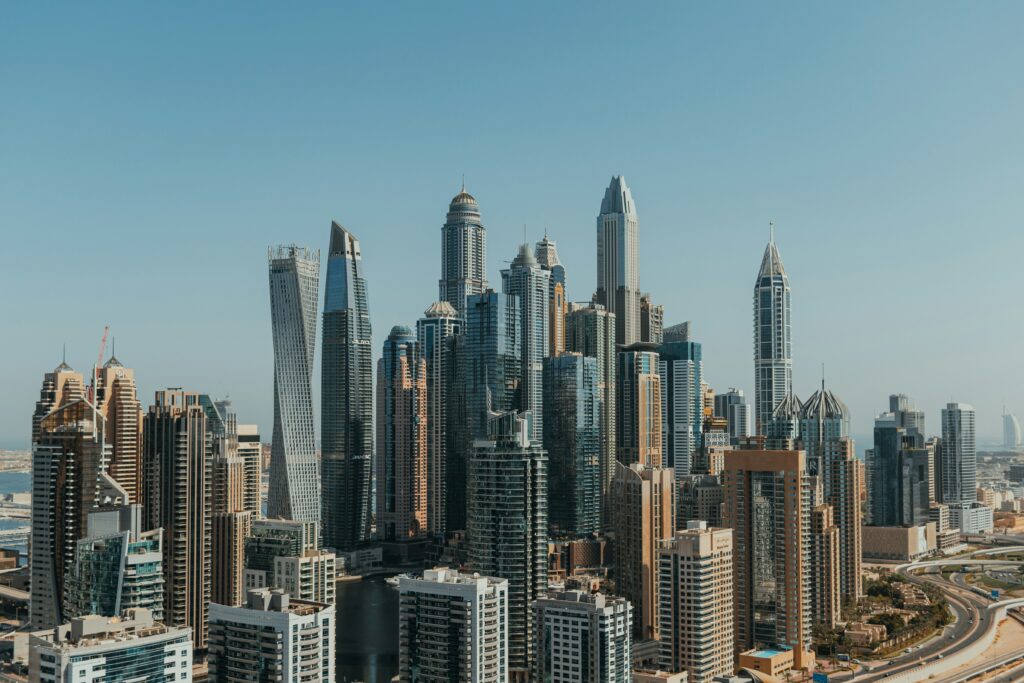
Let’s translate theory into projected numbers for a representative two-bedroom apartment in Dubai Marina, a prime location for both strategies, as we look ahead to 2026.
Scenario: 2-Bedroom Apartment in Dubai Marina
- Property Value (Estimated 2026): AED 2.2 Million
- Target Tenant/Guest: Upper-mid market
Long-Term Rental (Projected 2026):
- Annual Rent: AED 140,000 – AED 160,000
- Vacancy & Bad Debt Allowance: ~5% (1-2 weeks between tenants)
- Annual Management Fee: 5% of annual rent (~AED 7,500)
- Annual Maintenance/Cleaning: AED 3,000 (owner-responsible repairs)
- Agent Commission (One-time): 5% of annual rent (AED 7,500, upon new lease)
- Average Gross Yield: 6.4% – 7.3%
- Net Operating Income (NOI) Yield: ~5.8% – 6.6%
Short-Term Holiday Rental (Projected 2026):
- Average Daily Rate (ADR): AED 900 – AED 1,200
- Projected Occupancy: 70% – 78% (255 – 285 nights/year)
- Gross Annual Revenue: AED 229,500 – AED 342,000
- Management & Marketing Fee: 25% – 30% of revenue
- Operational Costs (Cleaning, Utilities, Supplies): 18% – 22% of revenue
- DTCM Licensing & Compliance: AED 4,500 (fixed)
- Furniture Depreciation & Replacement Fund: 5% of revenue
- Average Gross Yield: 10.4% – 15.5%
- Net Operating Income (NOI) Yield: ~6.1% – 8.5%
Key Takeaway: The short-term model projects a significantly higher gross revenue potential—often 50-100% more than long-term rent. However, after accounting for substantial operational costs, the net yield advantage narrows but remains favorable for well-managed properties in top locations. The short-term model turns the property into a more active business with higher gross returns and higher operational costs.
Beyond the Spreadsheet: The Qualitative Factors Shaping Your Decision
Cash flow is king, but it is not the only sovereign. Several qualitative factors decisively influence which model is truly superior for your situation.
- Liquidity & Flexibility: A short-term rental offers unparalleled flexibility. You can block periods for personal use, adjust pricing instantly for market shifts, and exit the rental business without waiting for a lease to expire. A long-term lease is a commitment; once signed, your asset is illiquid for the lease duration, and personal use is typically impossible.
- Operational Burden & Stress: This is the most critical differentiator. Long-term renting is largely passive after the tenant is placed. Short-term renting is an active hospitality business involving constant marketing, guest communication, cleaning coordination, and maintenance. This burden is entirely mitigated by partnering with a full-service property management company in Dubai, but this comes at the cost of the management fee. The decision often boils down to: would you prefer a smaller, guaranteed net income passively, or a larger gross income that requires either your time or a professional manager’s share?
- Asset Preservation & Wear-and-Tear: Conventional wisdom holds that long-term tenants cause less wear. However, a professional short-term rental manager conducts bi-weekly inspections and deep cleaning after every guest. We often find that our holiday homes in Dubai Marina are maintained in better condition than many long-term rentals due to this proactive, professional upkeep. Unfurnished long-term rentals may see less frequent turnover damage but can suffer from neglected maintenance.
- Market Risk Exposure: Your risk is diversified differently. Short-term rentals are exposed to tourism shocks (economic downturns, global events) but benefit from Dubai’s growing event calendar and tourism diversification. Long-term rentals are tied to the health of the expatriate job market and corporate relocation policies. In 2026, with Dubai’s focus on tourism growth and digital nomad visas, the short-term market’s demand drivers appear robust.
The Verdict: Which Strategy Wins for Your Property?
The analysis points not to a universal winner, but to a clear decision matrix based on your asset and objectives.
Choose Short-Term Rental If:
- Your property is in a prime tourism or business hub (Downtown, Marina, Palm Jumeirah, near DWTC).
- It is well-furnished with appealing amenities (view, pool, gym).
- You seek higher gross returns and are willing to share a portion with a professional manager to handle operations.
- You value flexibility for personal use.
- You are comfortable with income variability for higher potential gains.
Choose Long-Term Rental If:
- Your property is in a family-oriented community (Arabian Ranches, Springs, JVC) better suited for residential living.
- You prioritize a guaranteed, predictable income with near-zero operational effort.
- Your property is unfurnished or not optimized for the guest experience.
- Your investment strategy is purely passive and long-term wealth building over active income generation.
Conclusion: It’s Not Either/Or, It’s Strategic Alignment
The short-term versus long-term debate is ultimately about strategic alignment. For the right property in the right location, managed with professional precision, the short-term rental model in 2026 presents a powerful opportunity to significantly outperform traditional leasing. It transforms a static asset into a dynamic hospitality business. However, this requires an owner’s mindset shift from landlord to business owner, either personally or by proxy through a trusted management partner.
The long-term lease remains a cornerstone of a stable, passive investment portfolio, ideal for certain locations and owner profiles. The most successful investors in Dubai’s 2026 market will be those who objectively match their property’s inherent strengths with the rental model designed to exploit them, using clear data rather than intuition to guide their choice.
Unsure which model unlocks the highest value for your specific Dubai property? Don’t guess—analyze.
Crown Vacation offers a complimentary, data-driven Rental Strategy Assessment. We will evaluate your property’s location, features, and market positioning against our proprietary 2026 forecasts to provide a clear, unbiased recommendation with projected cash flow models for both short-term and long-term scenarios.
Make an informed decision for 2026. Contact Crown Vacation today for your personalized assessment.
3. High-Potential Emerging Districts:
Where We’re Seeing Opportunity
Based on our analysis, several emerging districts show strong potential for short-term rental success:
Dubai Creek Harbour: Positioned as the new downtown, with direct views of the future Dubai Creek Tower. It’s designed for tourism and will attract visitors seeking a next-generation experience.
Expo City Dubai: The legacy of the World Expo continues, with a focus on sustainability and innovation. This area will draw business travelers and event attendees, creating consistent corporate demand.
Al Jaddaf / Culture Village: Offering a more central location with growing cultural attractions and waterfront access, it provides a value-alternative to Downtown while remaining highly accessible.
4. The Master-Planned Community Advantage: JVC & Town Square
Communities like Jumeirah Village Circle (JVC) and Dubai South (where Expo was held) have demonstrated the blueprint for success. They started as off-plan opportunities and matured into short-term rental powerhouses due to their community feel, family-friendly amenities, and relative affordability.
The lesson: identify master-planned communities with a clear, comprehensive vision for living, not just building.
5. The Critical Question: Furnishing for ROI
An off-plan purchase allows you to plan your furnishing strategy from scratch. This is a significant advantage. We guide our clients on a turnkey furnishing package that balances aesthetic appeal with durability and cost-effectiveness, ensuring the property is “guest-ready” and optimized for photography the moment the keys are handed over.
6. The Timeline to Revenue: A Realistic Projection
Understanding the timeline is crucial for financial planning. From the handover date, investors should account for:
1. Furnishing & Setup (4-6 weeks)
2. Holiday Home Licensing (2-3 weeks)
3. Professional Photography & Listing (1 week)
4. Initial Marketing Ramp-Up (2-weeks)
A realistic timeline to consistent booking revenue is often 2-3 months post-handover. Our property management in Dubai services are designed to compress this timeline and accelerate your path to profitability.

7. The Pre-Construction Advantage: Building for the Guest
Buying off-plan allows you to select a unit with the guest in mind. We advise our clients to prioritize:
1. Higher floors with better views.
2. Units with balconies or terraces.
3. Proximity to amenities (but not directly overlooking noisy pool areas).
4. Layouts that are practical and photograph well.
8. A Strategic Partnership from Foundation to Check-Out
The most successful off-plan investors view their property management company as a strategic partner from the very beginning. At Crown Vacation, we engage during the buying process to provide viability assessments and later transition seamlessly into handling everything from furnishing and licensing to marketing and guest communication.
Conclusion: Data Over Speculation
The off-plan market presents a tremendous opportunity, but it requires a shift from speculative investment to income-focused analysis. By applying a disciplined, data-driven framework to evaluate location, amenities, and target demographics, investors can identify the gems that will deliver strong, sustainable short-term rental yields long after the initial buyer excitement has faded.
Considering an off-plan purchase for your short-term rental portfolio? Make an informed decision backed by expert analysis. Crown Vacation provides comprehensive Off-Plan Viability Reports to guide your investment and ensure it is positioned for maximum income from day one.